
 Environmental politics is often symbolic, so its no surprise that the symbolic legacy of most power figure in environmental history — Rachel Carson — has become highly contested.
She is, for some, the woman who turned a sleepy conservation movement into a green typhoon. For a few people, however, she is the symbol of environmentalism gone horribly wrong, a nightmarish figment of their fertile imaginations. And the most persistently contested areas of Carson’s symbolic afterlife involves a controversy over one pesticide ( DDT ) and one disease (malaria).
In the pugnacious facts-be-damned style of American extremists, Carson’s legacy is the nightmare of a worldwide ban on DDT that has (supposedly) killed millions of Africans who would otherwise never have contracted malaria.
It hardly matters that she never actually called for a ban on DDT or any pesticides, as William Souder says in his recent biography of Carson and this Slate article. Nor does it matter that there actually is no worldwide generic ban on DDT under the Stockholm convention. (The ban is on DDT’s indiscriminate agricultural use, not public health or anti-malaria campaigns). Nor does it matter that DDT and similar chemicals are suspected or proven carciogens and endocrine inhibitors.
Still, you have to admire the continued ability of the pugnacious pundits to say these sorts of things with a straight face:
Take Rush Limbaugh (April 29, 2013): “Rachel Carson’s fraud has been known long before since last week or last year. But it’s still active. DDT is still not permitted. It’s still subject to all of the denigration that was heaped upon it. Her words are still gospel. (CALLER: Yeah. And it’s killed millions of citizens on the continent of Africa.)Exactly. Millions of young Africans are dead because of Rachel Carson, who is now herself dead.”
Or Walter Williams (May 26, 2013): “Silent Spring led to a worldwide ban on DDT use … The World Health Organization estimates that malaria infects at least 200 million people, of which more than a half-million die, each year. Most malaria victims are African children. People who support the DDT ban are complicit in the deaths of tens of millions of Africans and Southeast Asians. (Yet) DDT presents no harm to humans and, when used properly, poses no environmental threat.”
Williams quotes from Henry Miller and Gregory Conko’s 2012 article in Forbes, which says: Carson’s proselytizing and advocacy raised substantial anxiety about DDT and led to bans in most of the world and to restrictions on other chemical pesticides. But the fears she raised were based on gross misrepresentations and scholarship so atrocious that, if Carson were an academic, she would be guilty of egregious academic misconduct.
These are not new ideas. Right wing science fiction author Michael Crichton, said in his “Remarks to the Commonwealth Club,” Sept. 15, 2003: “The DDT ban has caused the deaths of tens of millions of poor people, mostly children, whose deaths are directly attributable to a callous, technologically advanced western society that promoted the new cause of environmentalism by pushing a fantasy about a pesticide, and thus irrevocably harmed the third world. Banning DDT is one of the most disgraceful episodes in the twentieth century history of America. We knew better, and we did it anyway, and we let people around the world die and didn’t give a damn. … We know from history that religions tend to kill people, and environmentalism has already killed somewhere between 10-30 million people since the 1970s. It’s not a good record. Environmentalism needs to be absolutely based in objective and verifiable science, it needs to be rational, and it needs to be flexible. And it needs to be apolitical.”
Of course if Crichton wants to talk about the scientific method, he can hardly claim to be scientific on the one hand and then insult environmental scientists by calling them cult members and mass murderers on the other.
And for the rest — Williams, Miller, Limbaugh and the like — the point is not to inform, but to attack, to pull down a powerful symbol of environmentalism. Unfortunately, it’s clumsy and heavy handed, and so easily refuted (just pull up DDT on wikipedia) that it’s not worth a serious argument.
Carson’s legacy has become far more powerful than their mean-spirited, small-minded attacks can comprehend.
Postscript: After writing this I came across a 2007 take-down on the DDT issue by Tim Lambert.
 Smog Siege hits LA
 Resignation of James G. Watt
 Fridtjof Nansen
 Ken Saro-Wiwa
  Wangari Maathai
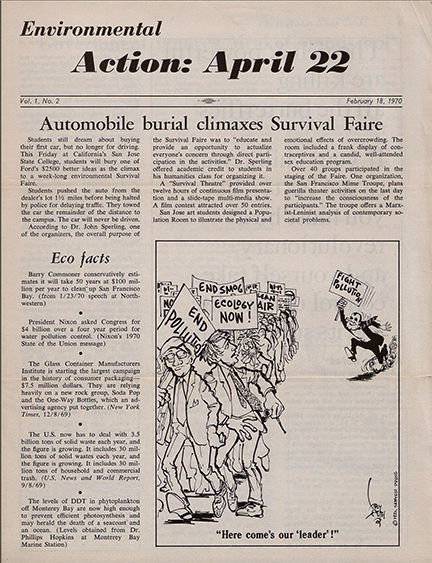 Environmental Action Archive
 The hats that created bird sanctuaries
 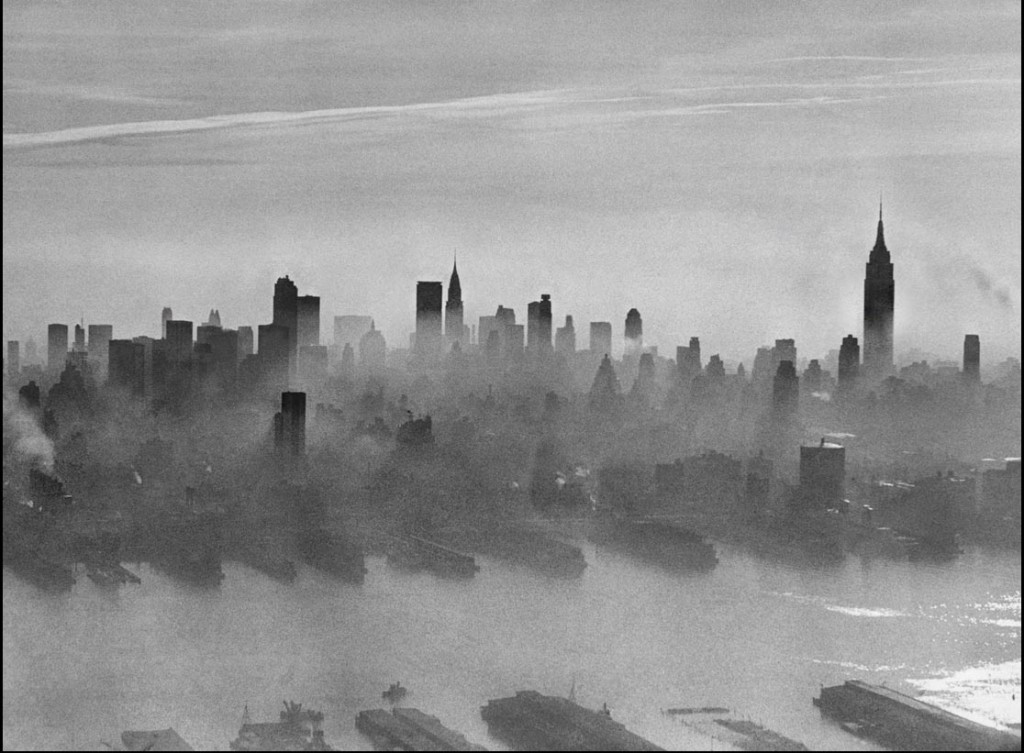 Pollution regs saved lives
 ¶ A giant tree's death
 ¶ Dymaxion car