
An historian is always hopeful when stumbling across an appeal to history in the popular press. But more often than not, an historian is disappointed.
Take, for example, one particularly baleful reaction to the Balcombe fracking protests in the UK this August of 2013. That the protesters were a superstitious lot, lacking any sense of history, is an argument employed by Daily & Sunday Express columnist, Niel Hamilton.
Although it must be read in its native ‘red-top’ context to be fully enjoyed, here are a few of Hamilton’s ‘lessons’ of history:
The doom-mongers are like primitive tribes, firing flaming arrows at the sun at sunset in order to make it rise again the next day, which obviously ‘works’ because the sun does rise again.
[It’s a ] fantasy that man makes any real difference to the cosmic forces dominating our planet.
Those against exploiting [natural gas] are modern-day Luddites.
Hamiton’s column is disappointing because the implication is that historical lessons run in one direction (toward “progress”) and that opposition can be dismissed with labels like “Luddite.” And the idea that ancient peoples used to fire arrows at the sunset to bring it back really defies common sense.
Who were the “Luddites?” Were they people irrationally opposed to any technological change, clinging to a fantasy of living in huts in some pre-industrial nirvana? Or were they, perhaps, people thrown out of work by the industrial revolution who feared having to live in that hut and watch their families starve? The historical record is quite clear on this point, and the best description of the situation was made by Lord Byron in a famous Feb. 27, 1812 House of Commons speech.
Hamilton seemed especially upset by the arrest of Green MP Caroline Lucas. But actually, as Ms. Lucas understands all too well, history shows us that democratic politics favors the wealthy until people make their voices heard. Balcombe was non-violent and vocal, and all to the good. Anyone who wants to learn about Britain’s leading Green MP can follow her Facebook page where you can see her ‘superstitious’ defense of children, recycling, suicide prevention, marriage equality and other supposedly ‘loony left’ ideas.
But this is typical. All too often, conservatives who might have fought their way to higher moral ground in their appeal to conservation and historical knowledge (and here I would invoke spirit of Winston Churchill and Teddy Roosevelt) have ceded that ground to industrial scale trolling and flaming.
There is one further point that absolutely must be made:
If there is any lesson whatsoever in 20th century history, is is that to paint opponents in dehumanizing terms (loonie left, eco-fascists) is corrosive and potentially destructive.
Rather than resorting to ad hominem attacks, conservatives can usually do much better with historical lessons. It starts by learning some history. Why not give that a try, Mr. Hamilton?

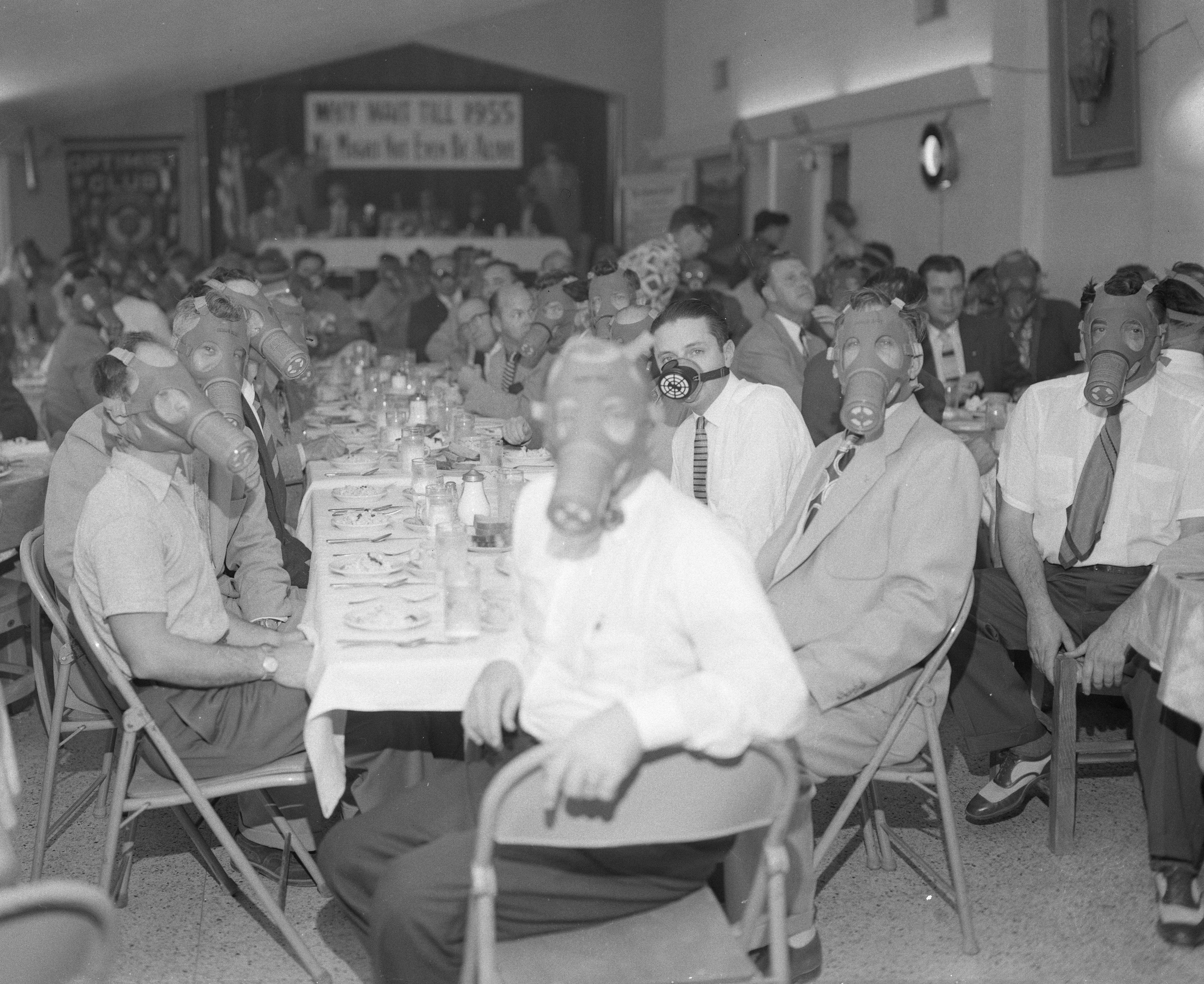 Smog Siege hits LA
 Resignation of James G. Watt
 Fridtjof Nansen
 Ken Saro-Wiwa
  Wangari Maathai
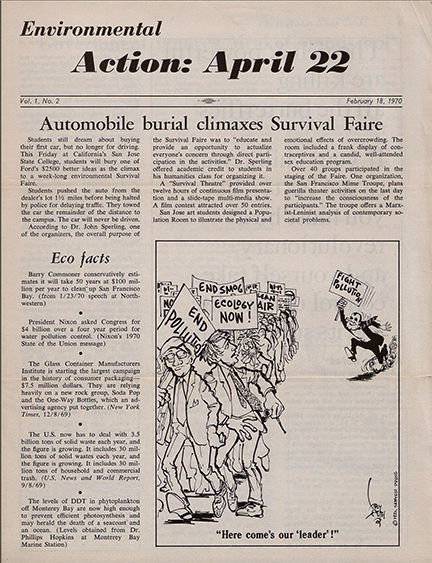 Environmental Action Archive
 The hats that created bird sanctuaries
  Pollution regs saved lives
 ¶ A giant tree's death
 ¶ Dymaxion car