
By Bill Kovarik
The Daily Climate
Editor’s note: This story is part of an ongoing series at The Daily Climate exploring climate change impacts hitting society right now. Find more stories here on The Daily Climate.
WILLIAMSBURG, Va. – Weary of debating the causes of climate change, mayors and other elected officials from Virginia’s battered coastal regions gathered here last week and agreed that local impacts have become serious enough to present a case for state action.
 “We are here to ask for your assistance,” said Norfolk Mayor Paul Fraim. “It’s a threat we can no longer afford to ignore.”
So far, assistance from the state level has been paltry and grudging at best. In 2011, a group of coastal scientists and planners, with the backing of mayors like Fraim, were asked to study the problems, but only after tea-party conservatives in the state Legislature insisted that “recurrent flooding” – and not climate change – would be the study’s sole focus.
The report, Recurrent Flooding Study for Tidewater Virginia was released in February and did indeed point to increasing local problems from sea-level rise. Among these were the delivery of vital services to the world’s largest navy base located in Norfolk, where a tide gauge shows a sea level rise of 14.5 inches over the past century and rising.
 Capacity crowd
The meeting drew a capacity crowd of 250 local emergency planners, regional federal officials, Virginia mayors and a smattering of state representatives. It was intended to provide a turning point for a political response to sea-level rise in Virginia.
State senator John Watkins, an influential Republican from Richmond, agreed with the mayors and planners. He also insisted that debating climate change is counterproductive. “That’s what people like Ken Cuccinelli want to do,” Watkins said of Virginia’s conservative attorney general and GOP gubernatorial candidate. “They want to debate climate change. I refuse to debate that.”
“The fact of the matter is, we’ve got rising waters,” Watkins added. “We’ve got recurrent flooding. There are more 100-year storms in the last 15 years than we’ve ever seen. Somebody has got to deal with it.” Watkins said he would be proposing a state legislative study commission in the next legislative session.
 That same urgent tone grounded the themes of a dozen local government speakers at the meeting, which also focused on legal methods to empower them in a state system where the Legislature has considerable sway.
‘Increasingly dangerous landscape’
“Virginia’s coastal communities were being left alone and blind to wander across an increasingly dangerous landscape by inaction on the part of federal and state government,” said Skip Styles of Wetlands Watch, one of the non-governmental organizations involved in the conference and working on coastal issues.
Some cities have found it difficult to engage residents. “The reality is that we can no longer live where we thought we could live, and build where we thought we could build, and that is just very hard to swallow,” said Hampton city mayor Molly Ward.
“The idea that local government can somehow solve this problem on its own is obviously just not true,” Ward added.
Dealing with – much less solving – the problem won’t be easy. Emergency planners like Jim Redick of Norfolk estimate that the cost of raising and rebuilding roads, water and electrical systems, as well as handling other vital changes in the coming years, will top $1 billion for Norfolk alone. Questions such as zoning, disclosure of flooding potential, insurance rates, levees and barriers, and emergency services present enormous challenges, he said.
Overcoming climate denial
One note was repeatedly sounded over the course of the meeting, held at the campus of the College of William and Mary: The political challenge of overcoming climate denial is hampering local efforts to respond to and plan for changes already underway.
 “I’m often hit with the idea that there’s no proof that (climate change) is happening,” said Lewis “Lewie” Lawrence, director of the Middle Peninsula Planning District Commission. “And I say, ‘There’s plenty of proof,’ and I’ll pull out the Sewell’s Point tide gauge, and they say, ‘Oh, they make that stuff up.'”
Maps show old islands in the Chesapeake Bay that today have disappeared beneath a rising sea, Lawrence said. “And people still say, ‘Those islands were never there, they’re making this up.’ ”
There are signs that the state could be turning a corner. The once-dominant tea party conservatives now appear to be fading; the states moderates are pushing back against the conservative policies of recent years. Coastal officials and planners hope that they can take advantage of the window and plan a coordinated and rational approach to sea-level rise and storm management.
“We’re not retreating,” said Dave Hansen, a former Corps of Engineers regional director and now deputy city manager of Virginia Beach. “We’re going to elevate.”
Added Norfolk’s Mayor Fraim: “Someone has to own this issue… The water is coming.”
Bill Kovarik is a frequent contributor to The Daily Climate and a professor of communication at Radford University in Southwestern Virginia. The Daily Climate is an independent, foundation-funded news service covering energy, climate change and environmental issues.
Photos, from top: Norfolk Mayor Paul Fraim by Linda Burton Kovarik. Flooding in Hopton Holiday Village in Norfolk, Va., courtesy Martin/flickr. Crews working to clear stormwater outflow pipes near Norfolk, Va., courtesy U.S. Army Corps of Engineers.
Find us on Twitter @TheDailyClimate or email editor Douglas Fischer at dfischer [at] DailyClimate.org
Find more Daily Climate stories in the TDC Newsroom

This work by The Daily Climate is licensed under a Creative Commons Attribution-No Derivative Works 3.0 United States License.
Based on a work at www.dailyclimate.org

 Martin County coal slurry disaster
  Christopher Columbus
  Al Gore
  Fridtjof Nansen
 Ken Saro-Wiwa
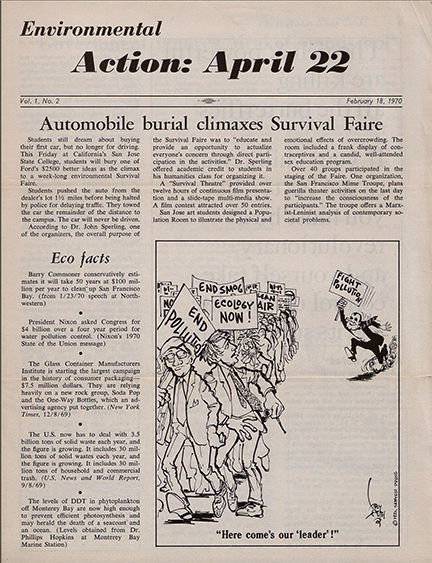 Environmental Action Archive
 The hats that created bird sanctuaries
 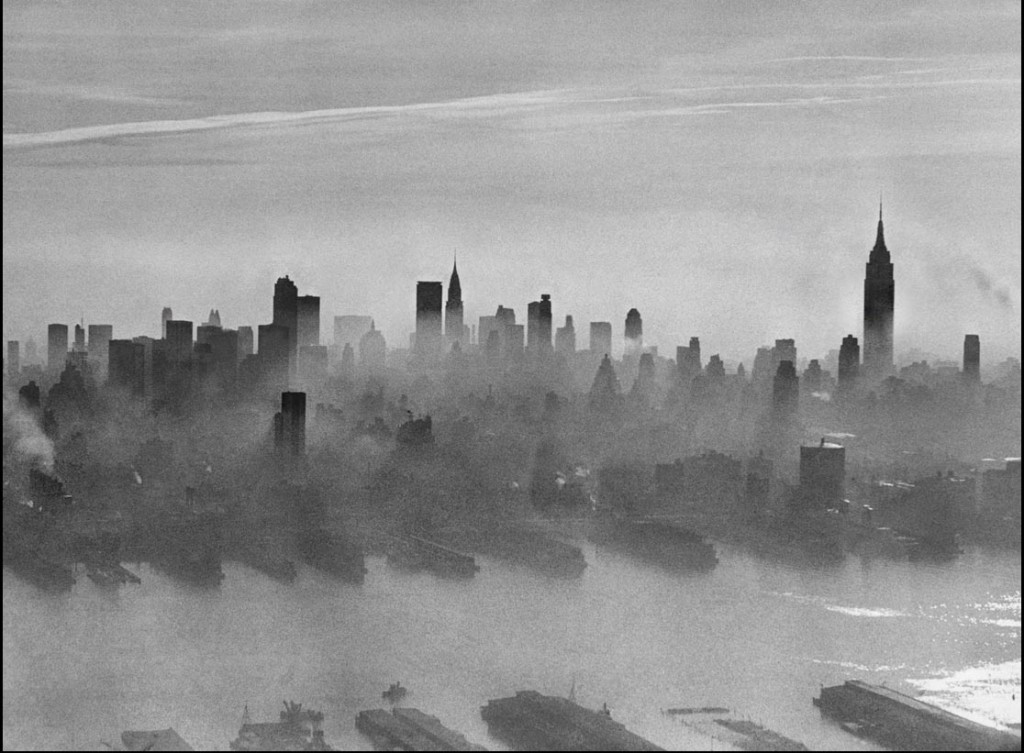 Pollution regs saved lives
 ¶ A giant tree's death
 ¶ Dymaxion car